
Blog Details
15 July, 2025
Comparing OH and BB Pump Configurations
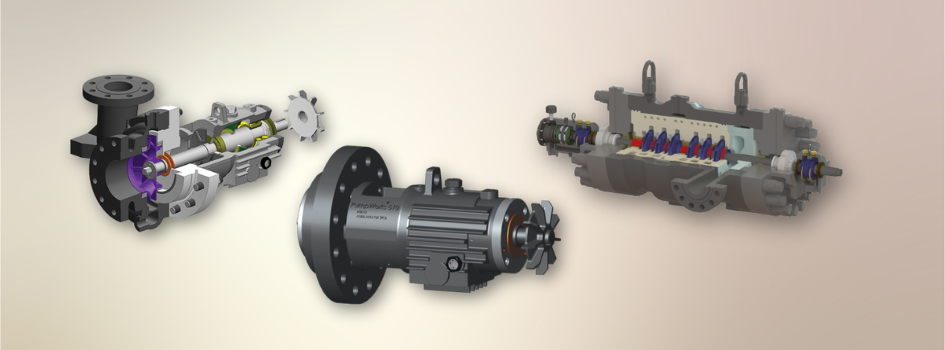
The following guide from PumpWorks focuses on two widely used horizontal centrifugal pump types: Overhung (OH) and Between Bearings (BB).
API 610 Pump Classifications
API 610 defines three primary centrifugal pump configurations:
OH (Overhung): The impeller is mounted at the end of a single shaft, cantilevered beyond the bearing housing.
BB (Between Bearings): The impeller is positioned between two bearings for improved balance and support.
VS (Vertically Suspended): The impeller and pump shaft are suspended vertically into the pumped fluid.
This article focuses on OH and BB configurations due to their relevance in horizontal installations.
oh2 pump 11th edition process pump
Overhung (OH) Pumps
Description
Overhung pumps feature a design in which the impeller is supported on one end of the shaft. The bearing housing is located entirely outside the process fluid.
OH Subtypes
OH1: Foot-mounted, end-suction pump with a separate bearing bracket.
OH2: Centerline-mounted casing with separate bearing housing.
OH3/OH4/OH5: Vertical inline configurations using close-coupled or separate driver arrangements.
OH6: Integrally geared high-speed design, often used in light hydrocarbon or gas compression applications.
Benefits
Smaller installation footprint
Quicker mechanical seal replacement and inspection
Preferred in moderate pressure applications with stable hydraulic conditions
Constraints
Higher shaft deflection risk at large impeller diameters or pressures
Limited suitability for high flow or elevated temperature systems
Common Uses
Utility water
Chemical feed
Light hydrocarbon transfer
Between Bearings (BB) Pumps
BB1 pump double suction pump
Description
BB pumps place the impeller between bearings, providing symmetrical support and reducing dynamic shaft loading under high-pressure conditions.
BB Subtypes
BB1: Axially split, single or double suction
BB2: Radially split, single-stage
BB3: Axially split, multistage
BB4: Radially split, multistage with segmental construction
BB5: Barrel-type, radially split, multistage
Benefits
Greater shaft stability across varying load conditions
Better suited for elevated pressures and process temperatures
Reduced vibration and axial thrust due to symmetrical rotor design
Constraints
Larger footprint and heavier construction
Maintenance requires more disassembly, especially in multistage designs
Common Uses
Boiler feed systems
Pipeline transport
Water injection and amine circulation
API 610 Pump Classifications
API 610 defines three primary centrifugal pump configurations:
OH (Overhung): The impeller is mounted at the end of a single shaft, cantilevered beyond the bearing housing.
BB (Between Bearings): The impeller is positioned between two bearings for improved balance and support.
VS (Vertically Suspended): The impeller and pump shaft are suspended vertically into the pumped fluid.
This article focuses on OH and BB configurations due to their relevance in horizontal installations.
oh2 pump 11th edition process pump
Overhung (OH) Pumps
Description
Overhung pumps feature a design in which the impeller is supported on one end of the shaft. The bearing housing is located entirely outside the process fluid.
OH Subtypes
OH1: Foot-mounted, end-suction pump with a separate bearing bracket.
OH2: Centerline-mounted casing with separate bearing housing.
OH3/OH4/OH5: Vertical inline configurations using close-coupled or separate driver arrangements.
OH6: Integrally geared high-speed design, often used in light hydrocarbon or gas compression applications.
Benefits
Smaller installation footprint
Quicker mechanical seal replacement and inspection
Preferred in moderate pressure applications with stable hydraulic conditions
Constraints
Higher shaft deflection risk at large impeller diameters or pressures
Limited suitability for high flow or elevated temperature systems
Common Uses
Utility water
Chemical feed
Light hydrocarbon transfer
Between Bearings (BB) Pumps
BB1 pump double suction pump
Description
BB pumps place the impeller between bearings, providing symmetrical support and reducing dynamic shaft loading under high-pressure conditions.
BB Subtypes
BB1: Axially split, single or double suction
BB2: Radially split, single-stage
BB3: Axially split, multistage
BB4: Radially split, multistage with segmental construction
BB5: Barrel-type, radially split, multistage
Benefits
Greater shaft stability across varying load conditions
Better suited for elevated pressures and process temperatures
Reduced vibration and axial thrust due to symmetrical rotor design
Constraints
Larger footprint and heavier construction
Maintenance requires more disassembly, especially in multistage designs
Common Uses
Boiler feed systems
Pipeline transport
Water injection and amine circulation